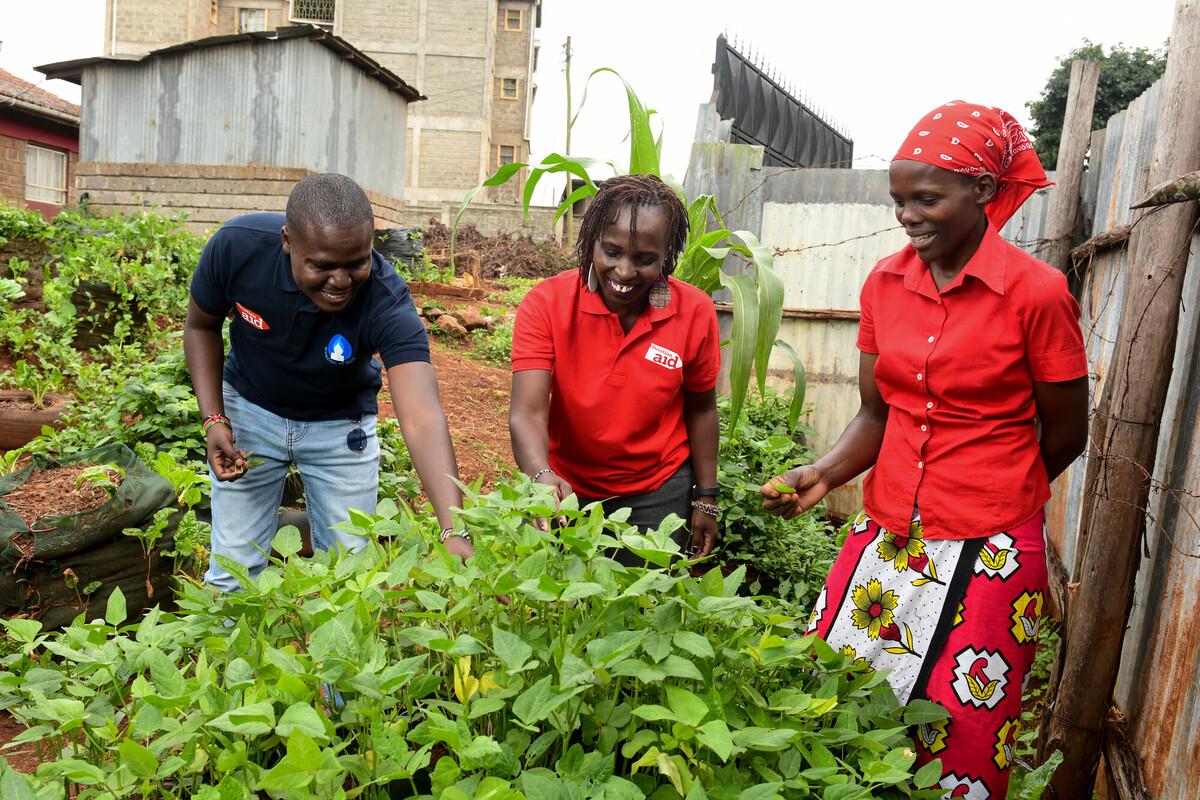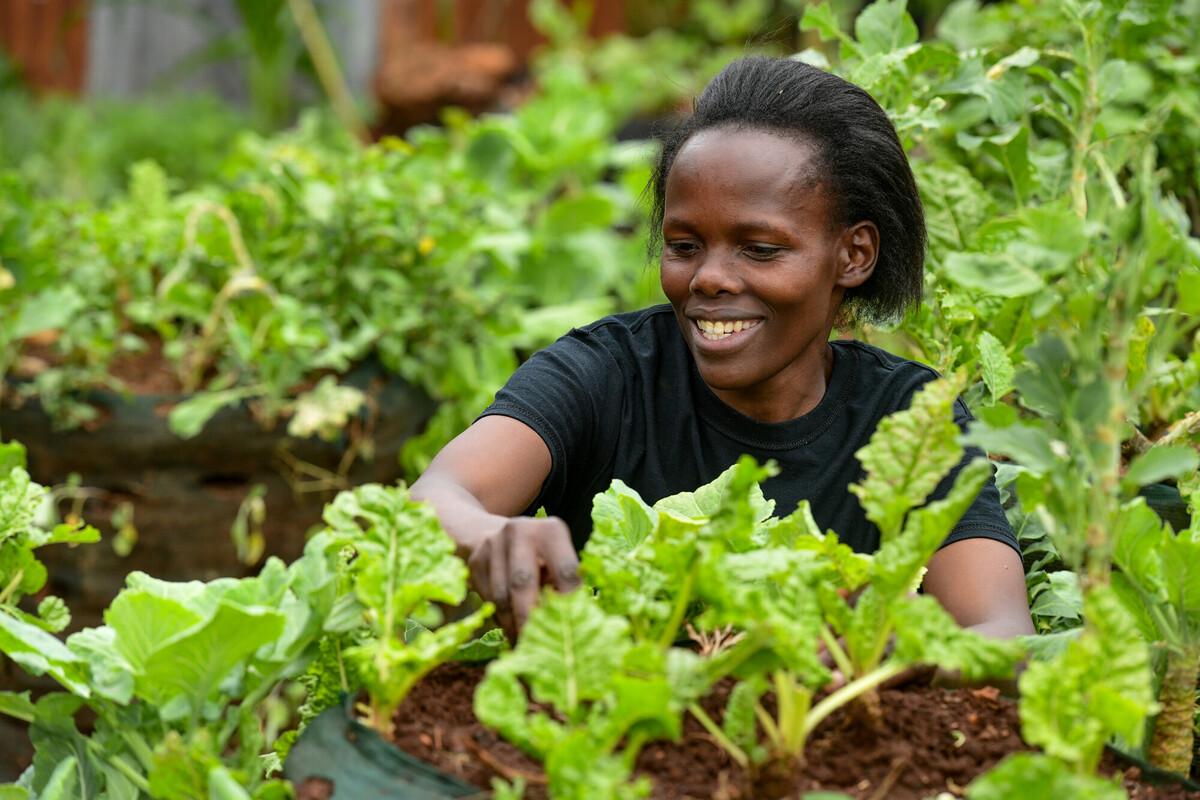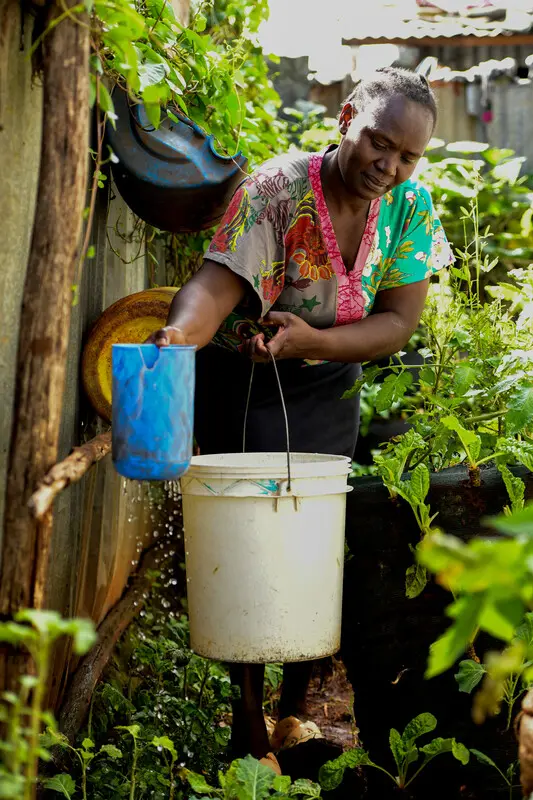



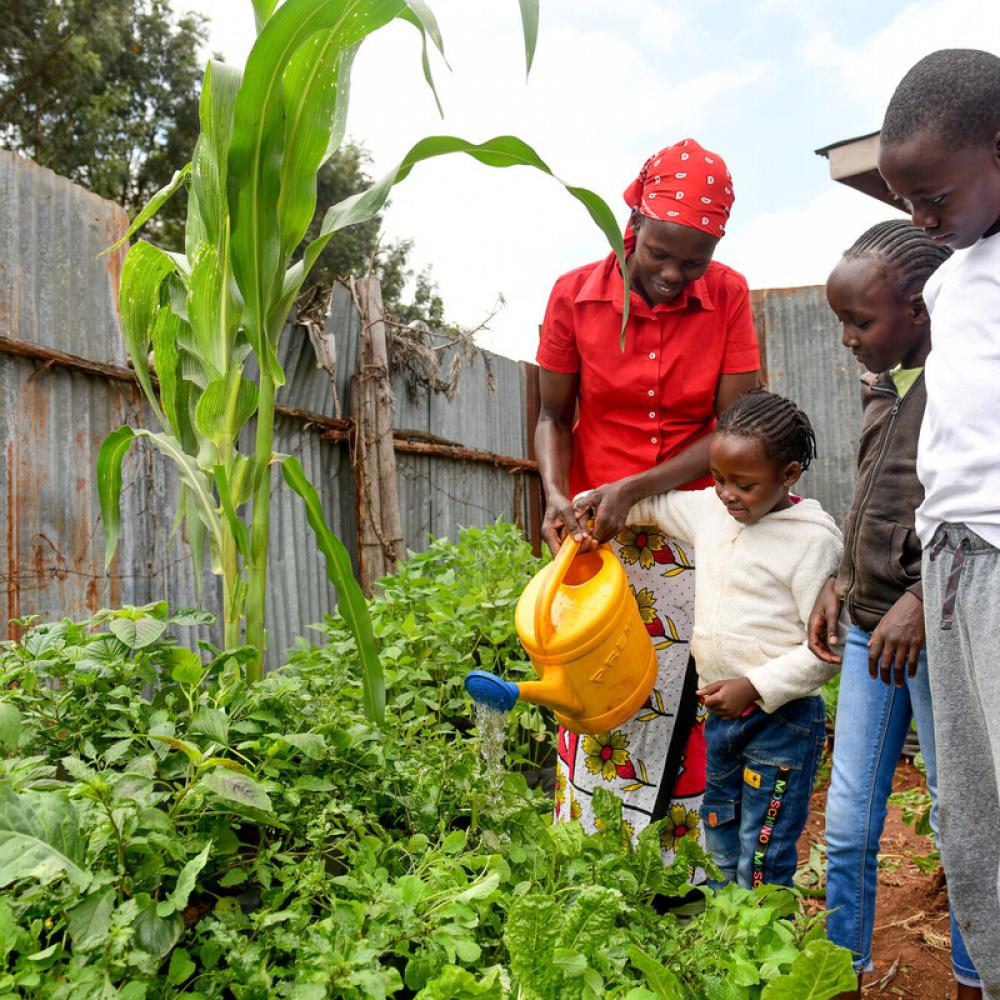
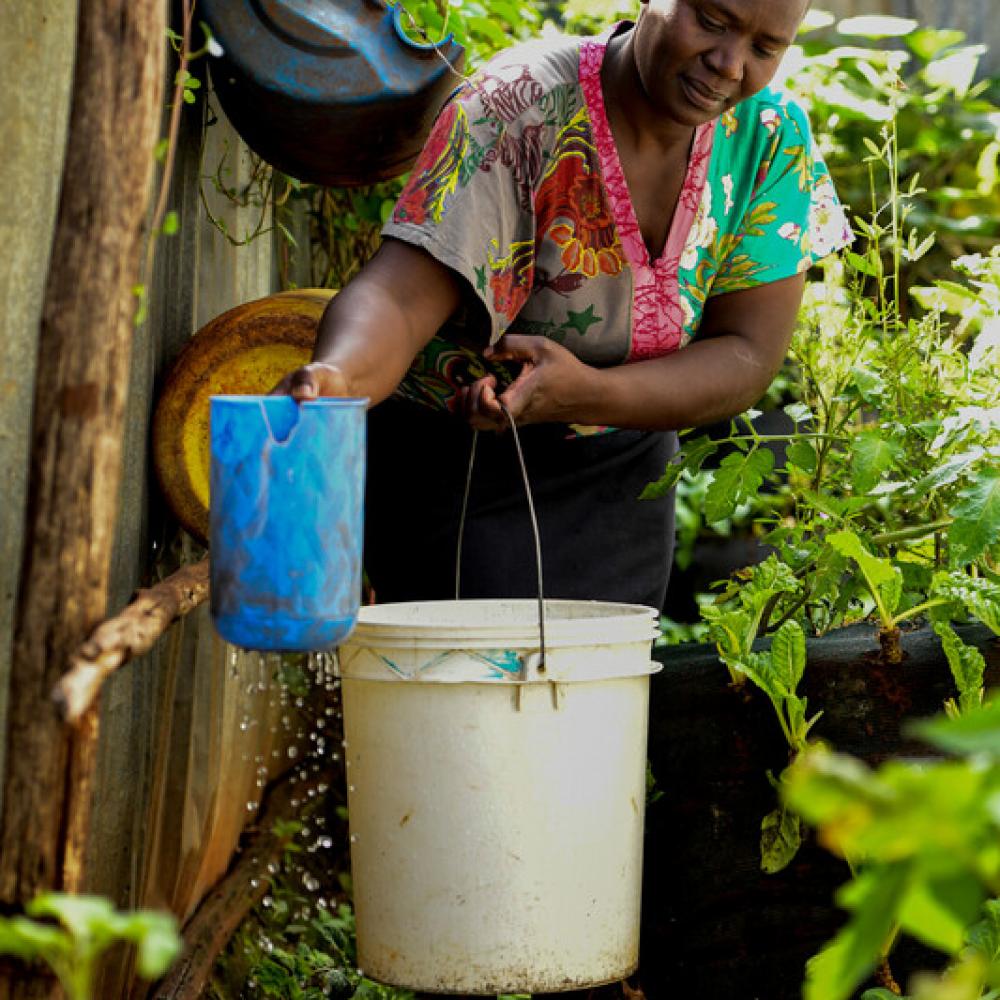
Hidden at the end of a concrete alley, noisy with the sounds of little children playing and the occasional barks from dogs, and shaded by drying washing, is a lush, plant-packed space. It belongs to thirty-eight-year-old Fridah, who has learned how to make the most of this tiny space to grow food to eat and sell.
Fridah lives with her twin sons Eliud and Abiud, her daughter and her grandson Quillan, in Dagoretti, an informal settlement in Kenya’s capital, Nairobi, which is home to more than 280,000 people. Homes are often simply built out of steel sheets or concrete, and electricity and running water are for the fortunate few.
Rapid urbanisation has resulted in more than half the population living in these semi-permanent areas of densely packed housing. International development agency Christian Aid works with local partners in places suffering severe poverty around the world, providing emergency humanitarian aid in times of crisis and delivering longer-term projects in collaboration with communities.
This Christian Aid Week (May10-16), the charity is sharing stories of people like Fridah, for whom it’s a daily struggle to feed her children. With secure jobs hard to find, and most people earning less than a dollar a day to cover school costs, rent and water, some days there isn’t enough for a meal.
But with tools, seeds and specialist training, families are learning how to make the most of small spaces to grow a steady supply of fresh vegetables to cook and sell.
They’re working with Christian Aid’s partner, Beacon of Hope - a faith-based charity - on projects such as Imarisha Kilimo – which means ‘strengthen agriculture’ in Swahili. The aim is to tackle food insecurity by providing training and practical support to set up climate-smart, small space urban farms.
Fridah lost her husband after an accident in February last year (2025) and her income now supports the rest of the family. She participates in the Imarisha Kilimo project and has a small area to grow vegetables near the one-room home she rents. Fridah is using metal fences for climbing plants and repurposing discarded containers as planters. She uses the kale, tomatoes and other vegetables she grows to supplement her income, which she earns from buying produce wholesale at the market and selling it on her own stall locally.
Fridah explained: “I am proud to eat what I’ve produced. This is my own work. I know how it was grown. I know how to grow without chemicals. When I started getting money, that's when I saw the importance of the project – what Imarisha Kilimo is all about. Now I can plan. I can buy this; I can buy that. I can help my family. I never thought a woman could also be a provider, but I’ve been able to learn. I've gained a lot with Imarisha Kilimo. Urban farming has changed my life.”
James Omwanda is a Project Officer with Beacon of Hope, leading the Imarisha Kilimo project. He is passionate about what the project can achieve: “What motivates me is that I can see hope in the eyes, words and thoughts of people in the community. I can hear them say how they are capable of transforming their lives through the support we give.
“Having worked with this population for years and years, and having seen families go hungry and breaking down because of food insecurity, violence, economic vulnerability and mental health issues, it gives me a lot of joy to see people coming into the project, embracing the support to transform their lives.
“We know the story of the mustard seed – a very small seed that became a very big tree that everybody looked up at. My work is really to help people understand that their mustard seed can grow into a very big tree that can support multiples of people through many, many years.”
When her stall bustles with customers and the harvest is good, Fridah can even build savings. She knows her twins have ambitions, and they must stay in school to realise them; that’s only going to be possible if Fridah can save money. Fridah’s urban farm isn’t just a buffer against going to bed hungry – this tiny but mighty space holds her children’s dreams for a brighter future.
This Christian Aid Week, people across the UK will be part of the growing change for people like Fridah. To find out how to get involved – whether you’d like to hold a plant sale or coffee morning, or simply make a donation - please visit the Christian Aid website.
Factfile:
Agriculture is the backbone of Kenya’s economy. Despite this, food security is fragile - not least because Kenya feels the full force of the climate crisis. With 80% of the country’s landmass classified as arid or semi-arid, the landscape is highly vulnerable to climate shocks. Severe droughts are often followed by heavy rain and powerful floods that devastate crops. This disruption to the nation’s food supply is a key factor in the rising price of groceries, pushing them beyond the means of many households. Meanwhile, the fresh produce that’s available is often covered in dangerous, unregulated chemical pesticides that are used to raise crops in the challenging climate. When eaten, these fruit and vegetables can cause serious health issues.
More about the project:
Beacon of Hope is training new urban farmers to cultivate vegetables, offering the skills and knowledge needed to grow produce in small spaces and unexpected places. Central to this course of learning is how to tend cone gardens. These vertical planters, with tiers of produce, not only have a small footprint, but retain precious water. They
don’t require ground to be dug and can be established in even Dagoretti’s narrowest alleyways. As Project Officer James Omwanda says: “There's not enough space. There's never enough space in Nairobi.”
Training in hydroponic farming techniques are also offered. This is the science of growing plants without soil, by instead feeding them on mineral-nutrient salts dissolved in water.
When you’ve no electricity, refrigeration isn’t an option. To ensure nothing of a bumper harvest goes to waste, participants learn to use dehydrators. This means fresh greens can be preserved and transformed into nutritious, long-life products that sell well and command higher prices than fresh vegetables. Furthermore, participants learn how to conserve precious rainwater, make organic compost, and develop small businesses by selling their produce at market.
Clever techniques like these are helping to diversify diets, maximise incomes and minimise waste.
Example costings:
· £5 could buy the seeds that kickstart a family’s nutritious vegetable garden.
· £15 could purchase the hand tools that mean an urban farmer can tend their crops.
· £30 could buy the trio of cone garden planters that host hundreds of plants in a tiny city space.
· £250 could help purchase three tablets that a training group share to access farming news, weather forecasts, market prices and mobile banking.
· £750 could pay for 20 aspiring urban farmers to receive the training, tools and support to establish vegetable gardens that end their family’s poverty.
· £1,000 could establish a soil-free hydroponic farm, complete with 2,000-litre water tank and solar powered irrigation, for an urban farming group who are transforming their lives.